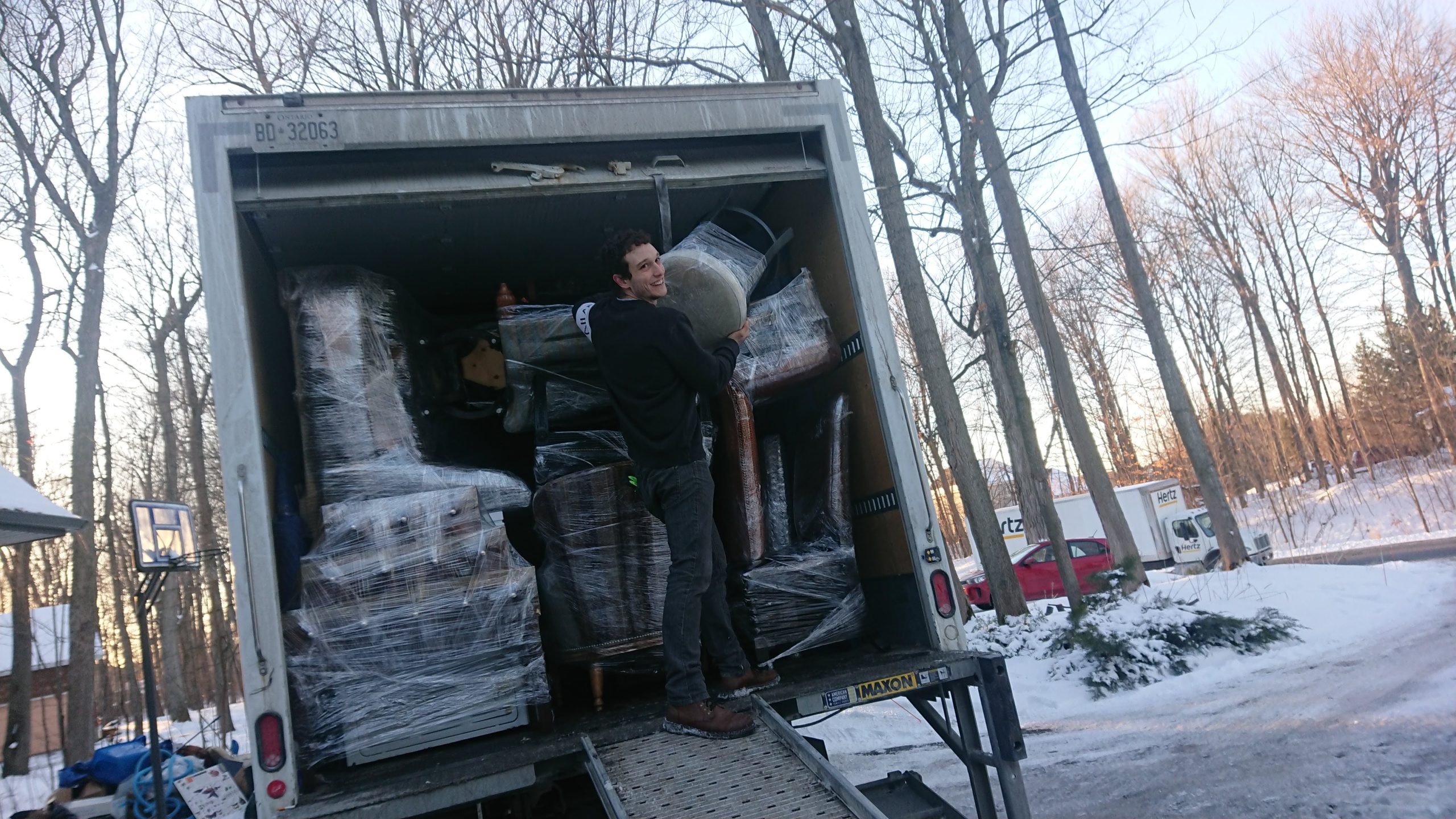


Moving from a house into a condominium can be an exciting lifestyle change. For some Ottawa homeowners, it means less exterior maintenance and a more manageable living space. For others, it brings them closer to work, restaurants, entertainment, public transportation, family, or the neighbourhood they want to call home.
But moving from a detached, semi-detached, or townhouse property into a condominium is not simply a smaller version of a traditional house move.
The logistics can be very different.
Instead of pulling a moving vehicle directly into a private driveway, there may be a designated loading area. Rather than carrying furniture through a front entrance whenever convenient, movers may need to work within a reserved elevator period. Hallways, parking garages, building access procedures, and condominium rules can all influence the moving plan.
For homeowners relocating from Kanata, Barrhaven, Orleans, Riverside South, Stittsville, Manotick, Greely, Nepean, Gloucester, or other Ottawa communities into a condominium in Downtown Ottawa, Westboro, Nepean, Gloucester, or elsewhere in the city, understanding these differences before moving day can prevent unnecessary complications.
At Labelle Moving, we believe the best condominium moves begin well before the first box reaches the elevator. Careful planning allows our team and the homeowner to work together efficiently while respecting the requirements of the building.
Here is what changes when moving from an Ottawa house to a condo and how homeowners can prepare.
The Move Becomes More About Access
With a traditional house move, access may be relatively straightforward.
A moving vehicle arrives, the team enters through the appropriate doorway, and belongings are transferred between the home and truck.
Condominiums introduce another layer.
Depending on the building, the route may involve:
- A loading area
- Service entrance
- Security desk
- Shared hallway
- Service elevator
- Underground parking restrictions
Every additional stage affects how the move should be organized.
Homeowners should understand the complete route from the moving vehicle to the condominium unit before moving day.
Contact Building Management Early
One of the first steps after confirming the moving date should be contacting condominium management.
Ask about the building’s moving procedures.
Important questions may include:
- Does the elevator need to be reserved?
- Are there designated moving hours?
- Is there a specific entrance for movers?
- Where can the moving vehicle park?
- Are there loading-area restrictions?
- Are protective elevator coverings required?
- Are there building-specific procedures residents must follow?
Requirements vary between properties.
A condominium move in Downtown Ottawa may operate differently from one in Westboro, Nepean, or Gloucester.
Never assume the process will be identical simply because both properties are condominiums.
Elevator Reservations Can Shape the Entire Schedule
An elevator reservation can become one of the most important parts of the moving timeline.
Some buildings provide a specific window during which the move must take place.
That means the household should ideally be completely packed before the reserved period begins.
If packing is still happening while the elevator clock is running, valuable time can be lost.
Homeowners should confirm the reservation early and communicate the scheduled window clearly with their moving team.
Measure the Elevator Before Moving Large Furniture
Furniture that easily left a suburban home may be more difficult to bring into a condominium.
Large pieces can include:
- Sectional sofas
- Dining tables
- Bed frames
- Dressers
- Cabinets
- Desks
Measure both the furniture and relevant building access points.
Consider:
- Elevator door width
- Elevator interior dimensions
- Hallways
- Unit doorway
- Interior condominium doors
This is particularly important for homeowners downsizing from larger properties in Kanata, Barrhaven, Stittsville, Manotick, or Greely.
A piece that suited a spacious detached home may not be practical in a condo.
Downsizing Becomes Part of the Move
Moving from a house to a condominium often means having less storage and fewer rooms.
That makes decluttering particularly important.
Before packing, homeowners can review:
- Furniture
- Clothing
- Kitchenware
- Decorations
- Books
- Seasonal items
- Garage belongings
- Basement storage
The question is not only whether an item can fit into a box.
The more useful question is whether it deserves space in the new home.
Reducing unnecessary belongings before moving day makes both transportation and condominium organization easier.
Garage Contents Need Special Attention
Homeowners leaving detached properties often forget how much is stored in the garage.
Common items include:
- Tools
- Bicycles
- Gardening equipment
- Outdoor furniture
- Sports equipment
- Automotive supplies
- Seasonal equipment
A condominium may not provide comparable storage.
Homeowners should determine what the new property offers before deciding which garage belongings to move.
Some items may need to be donated, sold, responsibly discarded, or stored elsewhere.
Outdoor Furniture May No Longer Have a Place
Patio sets, barbecues, planters, and other outdoor belongings can present another challenge.
Before packing these items, determine:
- Whether the unit has a balcony or terrace
- How much outdoor space is available
- Whether the building has restrictions
- Whether the furniture will physically fit
This is another area where measuring before moving can save considerable effort.
Condo Storage Should Be Planned Before Arrival
A house may provide:
- Basement storage
- Garage storage
- Large closets
- Spare rooms
A condominium may offer considerably less.
Before moving day, homeowners can review the unit’s:
- Closets
- Kitchen cabinets
- Bathroom storage
- Storage locker, if applicable
Understanding available storage helps determine what should make the move.
It also makes unpacking easier because belongings already have intended destinations.
Furniture Selection Becomes More Important
A smaller space does not necessarily mean less comfort.
It does mean furniture needs to work harder.
Homeowners may prefer pieces that fit the scale and layout of the condo rather than trying to recreate every room from the previous house.
Before moving large furniture, consider:
- Room dimensions
- Walking space
- Door clearance
- Natural pathways
- Storage needs
Moving fewer well-suited pieces can create a more comfortable home than filling every available area.
Label Boxes by Room and Priority
Good labeling is especially useful in a condominium where space can become crowded quickly.
Instead of placing all boxes in the main living area, labels can direct belongings immediately to the appropriate spaces.
Useful labels might include:
BEDROOM – CLOTHING
KITCHEN – DAILY USE
BATHROOM – LINENS
STORAGE LOCKER – SEASONAL
Priority labels can also identify boxes that should be opened first.
This keeps the unit more organized during the first several days.
Avoid Blocking Condominium Hallways
Shared hallways and common spaces need to remain accessible.
Boxes should not accumulate unnecessarily outside the unit or in shared areas.
An organized unloading process helps belongings move steadily from the vehicle to their intended destination.
This is another reason having the condominium prepared before moving day matters.
Parking Requires More Planning
A private driveway offers convenient access during a house move.
Condominium parking may be more complicated.
Depending on the property, the moving vehicle may need:
- A designated loading zone
- Temporary access
- Building approval
- Street parking arrangements
Homeowners should confirm these details beforehand.
This can be especially important in busier areas of Downtown Ottawa and Westboro, where convenient vehicle access cannot always be assumed.
The Distance From Truck to Unit Matters
Two condominium moves involving the same amount of furniture can require very different logistics.
In one building, the loading area may be close to the service elevator.
In another, belongings may need to travel through a longer corridor before reaching the unit.
The route influences:
- Moving time
- Equipment needs
- Overall organization
Sharing accurate access information with the moving team helps everyone prepare appropriately.
Protect Common Areas
Condominium moves take place within shared environments.
Careful handling helps protect:
- Elevator interiors
- Hallways
- Door frames
- Flooring
- Lobby areas
Buildings may have their own requirements for protecting these spaces during moves.
Following those requirements helps keep the relocation organized and respectful of other residents.
Think Carefully About Fragile Items
Condos often require belongings to travel through more stages than a house-to-house move.
A fragile item may move:
- Out of the original home
- Into the moving vehicle
- Through the building entrance
- Into an elevator
- Along a hallway
- Into the condominium
Proper packing becomes especially important.
Glassware, artwork, mirrors, electronics, and delicate decorative items should be appropriately protected before moving day.
Keep Important Documents and Access Items With You
Condominium living may involve keys, access cards, parking information, or building instructions.
These should remain with the homeowner rather than being packed into general moving boxes.
Keep accessible:
- Identification
- Property paperwork
- Building access information
- Keys
- Parking details
- Moving documents
- Important personal records
This prevents unnecessary searching during an already busy day.
Prepare for the First Evening
The first night in a condo can be much more enjoyable when basic necessities remain accessible.
Prepare a separate bag or box containing:
- Toiletries
- Medication
- Chargers
- Bedding
- Towels
- Clothing
- Basic kitchen supplies
The goal is to avoid filling a smaller living space with opened boxes while searching for essentials.
Moving From the Suburbs Can Change Daily Life Too
The relocation itself is only one part of moving from a house to a condo.
The lifestyle may change as well.
A homeowner moving from Barrhaven, Kanata, Orleans, Riverside South, Stittsville, Manotick, or Greely into a more central Ottawa condominium may experience differences in:
- Commuting
- Parking
- Shopping
- Outdoor maintenance
- Walkability
- Nearby services
The new home may have less private space while providing easier access to other parts of daily life.
Recognizing this transition can help homeowners decide which belongings truly fit their new lifestyle.
Downsizing Can Feel Liberating When Done Thoughtfully
Leaving a larger home can initially make homeowners wonder how everything will fit.
The solution is not always finding room for everything.
Sometimes the better solution is deciding what still belongs in the next chapter.
A thoughtfully organized condominium can provide:
- Less maintenance
- Easier cleaning
- More efficient storage
- A simplified household
- A comfortable amount of living space
The move becomes an opportunity to create a home around current priorities rather than past needs.
Professional Movers Help Manage the Logistics
Condominium moves require coordination.
At Labelle Moving, we understand that building access, elevator schedules, furniture dimensions, loading arrangements, and organized unloading can all influence the experience.
Clear communication before moving day helps our team prepare for the property and work efficiently within the building’s requirements.
Our goal is to make the physical transition easier while allowing homeowners to focus on settling into their new lifestyle.
Local Experience Matters Across Ottawa
No two neighbourhoods—or buildings—are exactly alike.
Moving from a detached property in Greely or Manotick into Downtown Ottawa involves different logistics from relocating between two condominiums in Nepean.
Likewise, a move from Barrhaven to Westboro, Kanata to Downtown Ottawa, or Orleans to Gloucester may involve changes in property type, access, traffic, and available storage.
Understanding both ends of the relocation helps create a moving plan suited to the actual properties involved.
Final Thoughts
Moving from an Ottawa house to a condominium changes more than the amount of space available.
Building rules, elevator reservations, parking, furniture dimensions, shared spaces, storage limitations, and access routes all become important parts of the moving plan.
The earlier homeowners understand these differences, the easier it becomes to prepare.
Decluttering before packing, measuring furniture, confirming building procedures, organizing storage, and communicating access information can all help create a smoother transition.
Whether moving from Kanata, Barrhaven, Orleans, Riverside South, Stittsville, Nepean, Gloucester, Manotick, Greely, Westboro, or another Ottawa community into a condominium in Downtown Ottawa or elsewhere across the city, thoughtful preparation can turn a complicated move into an organized new beginning.
At Labelle Moving, we believe every relocation should reflect the property, household, and lifestyle involved. A condo move deserves a plan designed specifically for the realities of condominium living.
Call to Action
Moving from a house into a condominium in Ottawa?
Call or text Labelle Moving at (343) 943-MOVE for a free moving estimate. Our experienced team serves Ottawa, Kanata, Barrhaven, Orleans, Nepean, Riverside South, Stittsville, Gloucester, Westboro, Manotick, Greely, Downtown Ottawa, and surrounding communities.
Let us help coordinate the details and provide an organized, carefully managed moving experience from your current front door to your new condominium.